



Price: [price_with_discount]
(as of [price_update_date] – Details)

Mobil 1 Extended Performance Full Synthetic Motor Oil 0W-20, 5 Quart: An In-Depth Technical Review
Introduction: The Benchmark for Extended Drain Intervals
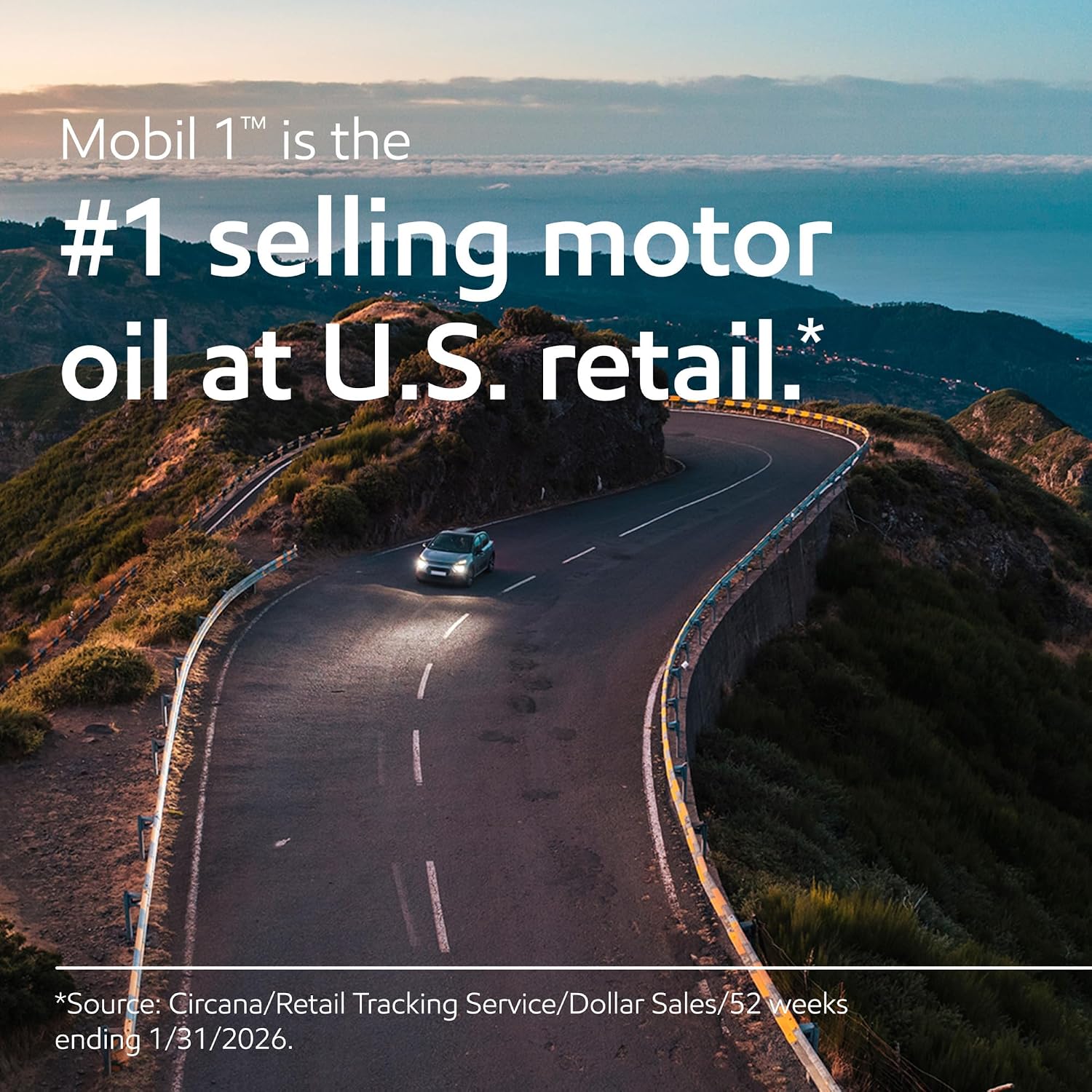
In the evolving landscape of automotive lubrication, the demand for fluids capable of bridging the gap between increasingly complex engine architectures and the consumer desire for reduced maintenance frequency has never been higher. The Mobil 1 Extended Performance Full Synthetic Motor Oil 0W-20, packaged in the convenient 5-quart container, positions itself squarely at this intersection. As the flagship extended-drain offering from the brand that holds the title of the #1 selling motor oil in America at retail, this product carries significant market weight. It is not merely a commodity fluid; it is a engineered system designed to protect critical engine hardware for up to 25,000 miles or one year, whichever comes first. This review dissects the technical specifications, formulation philosophy, and claimed performance envelope of this specific viscosity grade to determine its suitability for the modern vehicle parc.
Viscosity Profile: Decoding 0W-20 for Modern Powertrains
The SAE 0W-20 viscosity grade is the dominant specification for late-model gasoline engines, particularly across the North American fleets of Toyota, Honda, Ford, General Motors, and Hyundai/Kia. The “0W” winter rating is critical: it denotes a cranking viscosity low enough to ensure immediate oil flow at temperatures as low as -35°C (-31°F). In practical terms, this minimizes the “dry start” wear window—the period between ignition and full hydrodynamic lubrication—where a significant percentage of total engine wear occurs.
The “20” represents the high-temperature, high-shear (HTHS) viscosity at 100°C. This lower viscosity grade is a direct response to Corporate Average Fuel Economy (CAFE) standards. Thinner oil reduces parasitic losses from viscous drag within the crankcase and valvetrain, directly contributing to fuel efficiency gains. However, formulating a 0W-20 that maintains film strength over 25,000 miles requires a robust base oil stock and a sophisticated additive package to prevent permanent viscosity shear down and volatility burn-off. The Mobil 1 Extended Performance formulation addresses this through its full synthetic base oil architecture, which inherently possesses a high Viscosity Index (VI) and low Noack volatility compared to conventional or synthetic blend counterparts.
The Triple Action Formula: Deconstructing the Chemistry
The core marketing and technical identity of this product rests on the “Triple Action Formula.” While the proprietary blend ratios remain trade secrets, the functional claims associated with this formula map directly to three distinct chemical mechanisms required for extended drain performance: Performance, Protection, and Cleanliness.
1. Oxidation Control and Thermal Stability
The description highlights “superior oxidation control” meeting ILSAC GF-7 standards. Oxidation is the primary chemical degradation pathway for motor oil. As oil ages, exposure to heat and blow-by gases causes hydrocarbon chains to cross-link, forming acids, varnish, and sludge. This increases viscosity, depletes the Total Base Number (TBN), and leads to corrosive wear. The Extended Performance line utilizes a heavily fortified antioxidant system—likely a synergistic blend of hindered phenols and aromatic amines—designed to scavenge free radicals over a 25,000-mile interval. This ensures the oil retains its viscosity grade and acid-neutralizing capacity far beyond the standard 5,000–7,500 mile drain intervals of conventional oils.
2. Deposit and Sludge Mitigation (“Cleans Your Engine in 1 Oil Change”)
The claim that the oil “cleans your engine in 1 oil change” points to a high-performance detergent/dispersant package. Detergents (typically calcium or magnesium sulfonates/salicylates) neutralize acids and prevent deposit formation on hot surfaces like piston crowns and ring lands. Dispersants (typically polyisobutylene succinimides) suspend soot and insoluble contaminants in the oil bulk, preventing them from agglomerating into sludge. For an extended drain oil, the dispersancy reserve must be massive. The formulation must hold a high contaminant load—blow-by gases, fuel dilution, moisture, and wear metals—in suspension for 25,000 miles without dropping out as sludge in the oil pan or timing cover. The claim of reducing “deposits and sludge buildup” to extend engine life suggests a treat rate significantly higher than standard ILSAC GF-6/GF-7 minimums.
3. Wear Protection: Timing Chains and Pre-Ignition (LSPI)
Modern Gasoline Direct Injection (GDI) and Turbocharged Gasoline Direct Injection (TGDI) engines introduce two specific wear challenges addressed explicitly in the product description: Timing Chain Wear and Low-Speed Pre-Ignition (LSPI).
- Timing Chain Wear: Stretched timing chains are a known failure mode in many modern engines, often caused by abrasive wear from soot-laden oil or insufficient anti-wear film strength at the chain-pin interface. The Mobil 1 formulation targets this with robust anti-wear additives (likely ZDDP – Zinc Dialkyldithiophosphate – balanced carefully to protect emissions systems) and friction modifiers that maintain boundary lubrication under high shear.
- LSPI Protection: LSPI is a stochastic combustion event in boosted engines that can cause catastrophic piston and ring land damage. ILSAC GF-7 mandates specific testing (Sequence IX) for LSPI prevention. The description notes “enhanced protection against pre-ignition,” confirming the formulation utilizes calcium detergent management (lower calcium, higher magnesium) and potentially specific organo-molybdenum or phosphorous compounds proven to quench the precursors to pre-ignition events.
ILSAC GF-7 Compliance: The New Standard
The explicit mention of ILSAC GF-7 standards is a critical technical milestone. GF-7, which supersedes GF-6, introduces stricter requirements for:
- Fuel Economy Retention: The oil must maintain its fuel economy benefits over the drain interval (not just fresh). The “Improves gas mileage” claim (vs. GF-7 fuel economy requirement) is validated by the Sequence VIE test.
- Volatility Control: Stricter Noack volatility limits reduce oil consumption and phosphorus poisoning of catalytic converters.
- GPF/DPF Compatibility: With Gasoline Particulate Filters (GPFs) becoming standard on GDI engines to meet emissions norms, the oil must be “mid-SAPS” (Sulfated Ash, Phosphorus, Sulfur) compatible. Mobil 1 Extended Performance 0W-20 is formulated to protect these expensive aftertreatment devices while maintaining the high TBN required for 25,000-mile acid neutralization.
The 25,000-Mile Guarantee: Risk Management and Engineering Reality
The headline feature—*“Protects for 25,000 miles or 1 year, whichever comes first (Guaranteed)”**—is a bold warranty statement backed by the manufacturer’s confidence in the additive reserve and base oil quality. However, a technical review must contextualize this claim.
- Base Oil Quality: Achieving 25,000 miles on a Group III/III+ synthetic base oil (standard for this price tier) requires exceptional oxidation resistance. The “Extended Performance” line historically utilizes a higher concentration of Group III+ base stocks and potentially some PAO (Polyalphaolefin) or GTL (Gas-to-Liquid) base oils to achieve the necessary low-temperature pumpability and high-temperature deposit resistance simultaneously.
- The “Whichever Comes First” Clause: The one-year limit addresses the chemical reality of hydrolysis and additive stratification in low-mileage/short-trip driving. In these duty cycles, the oil never reaches full operating temperature long enough to boil off moisture and fuel dilution. This leads to emulsion formation and accelerated acid buildup, depleting the TBN reserve rapidly regardless of mileage.
- Severe Service Caveats: While the warranty covers 25,000 miles, the definition of “normal service” excludes severe duty: frequent towing, idling, dusty environments, or track use. In those scenarios, the contaminant ingression rate exceeds the dispersant capacity, and the interval must be shortened. The 5-quart jug sizing aligns perfectly with the sump capacities of the most popular 4-cylinder and V6 engines utilizing 0W-20 (typically 4.4–5.1 quarts), allowing for a complete fill with minimal top-off waste.
Cold-Start Performance and Operational Envelope
The description emphasizes “excellent cold-start and low-temperature performance.” For a 0W-20, this is defined by the CCS (Cold Cranking Simulator) and MRV (Mini-Rotary Viscometer) tests. A high-quality 0W-20 must crank below 6,200 cP at -35°C and pump below 60,000 cP at -40°C with no yield stress. The “Triple Action” formulation ensures the pour point depressants (PPDs) and wax crystal modifiers are shear-stable. This means the oil flows to the VVT (Variable Valve Timing) actuators and overhead cams instantly upon startup in sub-zero climates, protecting the timing chain tensioners—which rely on oil pressure—from rattling and wear during those critical first seconds.
The 5-Quart Package: Logistics and Application
The 5-quart (4.73 Liter) container is the industry standard for DIY maintenance and professional quick-lube operations. For the target viscosities (0W-20), this volume covers the vast majority of the North American vehicle parc:
- Toyota/Lexus 2.5L Dynamic Force (A25A): ~4.4–4.8 qts
- Honda 1.5T / 2.0T (L15/L20): ~3.7–4.4 qts (leaving reserve for top-off)
- Ford EcoBoost 2.3L / 2.7L / 3.5L: ~5.0–6.0 qts (may require a second quart bottle for full fill, but 5 quarts covers the bulk)
- GM 2.0T / 2.7L Turbo / 3.6L V6 (LGX): ~5.0–6.0 qts
The ergonomics of the jug—typically featuring a sure-grip handle and precision pour spout—reduce spillage risk, a minor but practical detail for the end user.
Brand Pedigree: NASCAR and Market Leadership
The description leverages two significant trust signals: “Official Motor Oil of NASCAR®” and “#1 selling motor oil in America at retail.” While NASCAR Cup Series engines run highly specialized, low-viscosity, ester/PAO-based racing oils (often 0W-5 or 5W-20 custom blends) that share little chemical similarity with a street-legal GF-7 0W-20, the association signifies a commitment to extreme pressure testing and high-RPM durability validation. The technology transfer philosophy—testing additive chemistry in the most brutal lubrication environment on earth (8,000+ RPM, 300°F+ oil temps)—informs the robustness of the street formulations. The market leadership statistic (Circana/Retail Tracking Service, 52 weeks ending Feb 1, 2025) confirms widespread distribution network availability and installer familiarity, reducing the risk of counterfeit products—a genuine concern in the lubricant supply chain.
Economic Value Proposition
When evaluating the cost-per-mile, the Mobil 1 Extended Performance 0W-20 presents a compelling argument. While the upfront cost per quart is higher than conventional or standard synthetic oils (often 1.5x–2x the price of a 5,000-mile oil), the extended interval collapses the labor cost (if professional) or time cost (if DIY) by a factor of 3 to 5.
- Standard Synthetic (7,500 miles): 3.3 changes per 25k miles.
- Extended Performance (25,000 miles): 1 change per 25k miles.
- Filter Consideration: To realize the 25,000-mile interval, a premium extended-life oil filter (rated for 20k+ miles, typically synthetic media with high capacity/high efficiency) is mandatory. Using a standard 5,000-mile cellulose filter will likely result in bypass valve opening (unfiltered oil circulating) long before the oil chemistry fails.
Compatibility and Backward Serviceability
A key advantage of the ILSAC GF-7 / API SP specification carried by this oil is full backward compatibility. It supersedes API SN Plus, SN, SM, SL, and SJ, as well as ILSAC GF-6, GF-5, etc. This means the 5-quart jug of 0W-20 Extended Performance is safe for use in a 2024 Toyota Camry Hybrid, a 2015 Honda CR-V, or a 2008 Chevrolet Impala (spec permitting 0W-20/5W-20). The enhanced LSPI protection and timing chain wear additives provide a safety margin for older engines that were not originally designed with those failure modes in mind but benefit from the superior chemistry.
Limitations and Considerations
No product is universally optimal. Based solely on the provided specifications and general lubrication principles applicable to this category:
- Viscosity Grade Limitation: This is strictly a 0W-20. It is not suitable for engines specifying 0W-16, 5W-30, 0W-40, or 5W-40 (common in European vehicles like VW/Audi/Porsche/Mercedes/BMW, heavy-duty trucks, or high-performance applications). Using 0W-20 in a 5W-30 spec engine risks low oil pressure at operating temperature and insufficient HTHS film thickness.
- Not for Diesel: This is a gasoline engine oil (API SP / ILSAC GF-7). It lacks the high TBN, soot dispersancy, and shear stability required for modern diesel emissions systems (CK-4 / FA-4 specs).
- Price Sensitivity: For vehicles nearing end-of-life, or those operated in severe dust/dirt environments where oil changes are frequent regardless of oil life, the premium cost may not be amortized.
Conclusion: A Technologically Coherent Solution
The Mobil 1 Extended Performance Full Synthetic Motor Oil 0W-20, 5 Quart, represents a mature, highly engineered solution to the modern maintenance paradigm. It successfully translates the marketing promise of “25,000-mile protection” into a specific chemical architecture: a high-volatility-resistant synthetic base stock, a GF-7 certified additive package balancing LSPI prevention, timing chain wear reduction, and GPF compatibility, and a massive dispersant/detergent reserve to manage contamination over an extended timeline.
It is not simply “oil that lasts longer”; it is a fluid engineered with a specific additive density designed to survive the cumulative thermal and mechanical stress of 25,000 miles of combustion byproducts. For the owner of a modern GDI/TGDI vehicle operating in normal service who values time, reduced environmental waste (fewer quarts disposed), and maximum engine cleanliness, this product sits at the top tier of the passenger car motor oil (PCMO) category. It delivers on the “Triple Action” promise—performance, protection, cleanliness—backed by the manufacturing consistency of the market leader and the validation of the latest ILSAC GF-7 standard. Provided the user adheres to the “1 year” time limit and pairs it with a quality extended-life filter, the Mobil 1 Extended Performance 0W-20 offers a technically sound, warranty-backed pathway to minimizing maintenance events without compromising engine longevity.