






Price: [price_with_discount]
(as of [price_update_date] – Details)

Creating a Sanctuary of Sleep: An In-Depth Review of the Floral Butterfly Crib Mobile for Nursery Harmony
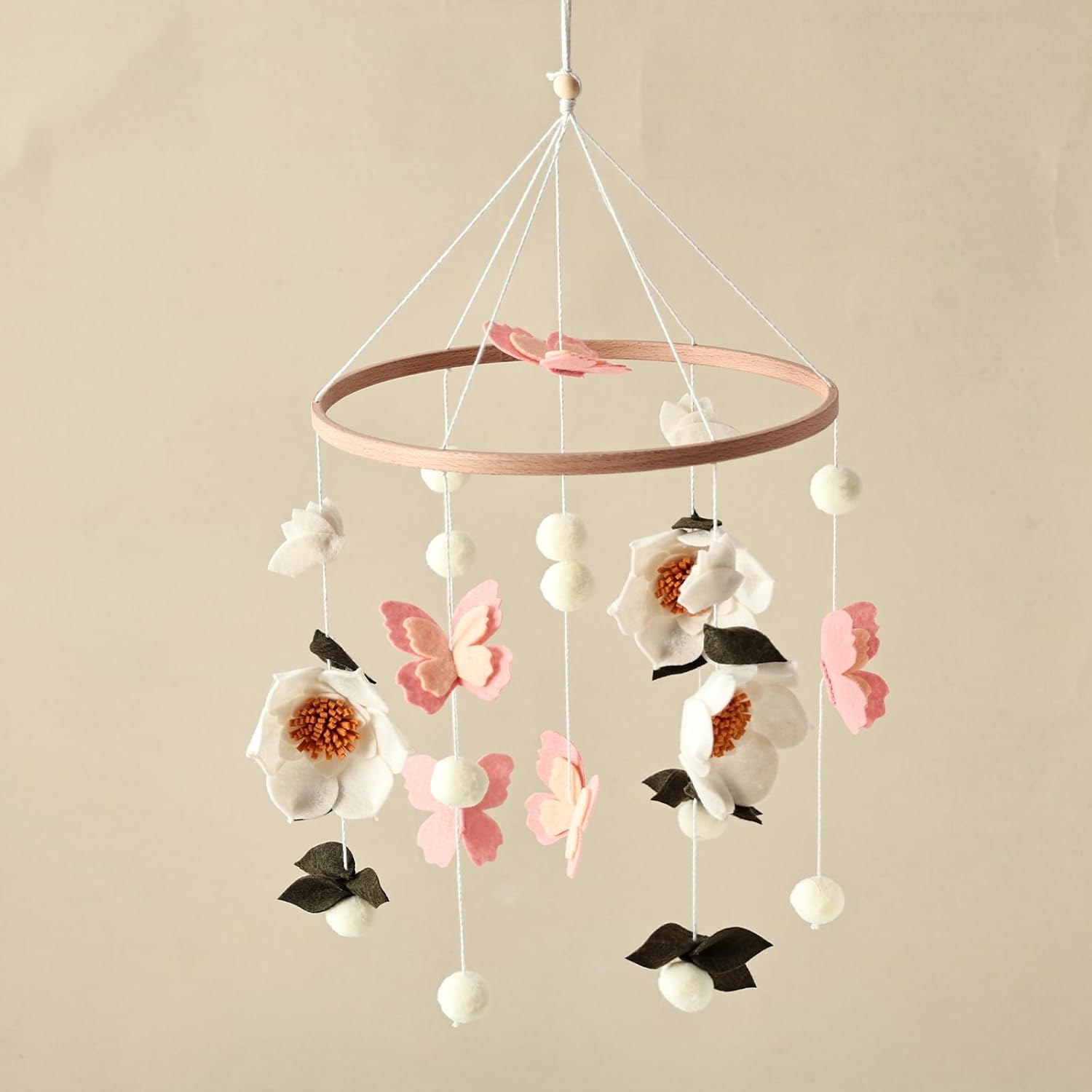
Designing a nursery is an exercise in balancing aesthetics with developmental science. Parents seek pieces that soothe, stimulate, and withstand the rigorous safety standards required for a newborn’s environment. The Baby Crib Mobile for Boys and Girls, Floral Mobile for Crib, Butterfly and Flower Nursery Decor, Crib Hanging Toy for Newborn enters this market with a clear proposition: a nature-inspired, eco-conscious centerpiece designed to bridge the gap between a decorative accent and a developmental tool. Based on the manufacturer’s specifications and design philosophy, this analysis explores the material integrity, visual engagement mechanics, educational underpinnings, and spatial versatility of this hanging nursery accessory.
Material Integrity: The Foundation of Safety and Sustainability
The primary concern for any product entering a crib is material composition. This mobile distinguishes itself through a explicit commitment to “Eco-Friendly and Safe Materials.” The construction relies on a triad of natural components: 100% eco-friendly felt, pure wood, and heavy-duty cotton thread. This material selection is not arbitrary; it addresses the critical intersection of tactile safety, durability, and environmental responsibility.
The use of pure wood for the frame provides a structural rigidity that plastic alternatives often lack. Wood offers a warm, organic aesthetic that aligns with the “nature” theme, but more importantly, it eliminates concerns regarding BPA, phthalates, or volatile organic compounds (VOCs) often associated with synthetic frames. The description emphasizes a “sturdy wooden frame,” suggesting a low center of gravity and resistance to warping over time—a crucial factor for an item suspended above a sleeping infant.
The hanging elements—butterflies, flowers, and leaves—are crafted from 100% eco-friendly felt. Felt is an ideal medium for crib mobiles. Unlike hard plastic or sharp-edged metal, felt presents zero risk of injury should the mobile be lowered within reach or if a component detaches. It is lightweight, allowing for the gentle, air-current-driven movement essential for visual tracking, yet dense enough to hold shape. The description notes these are “cotton dolls,” implying a soft, three-dimensional construction rather than flat cutouts, adding textural depth to the visual experience.
Binding these elements is heavy-duty cotton thread. This is a critical, often overlooked safety feature. Synthetic nylon or polyester threads can degrade under UV exposure or humidity, becoming brittle. Cotton, particularly a heavy-duty grade, offers high tensile strength with a natural fiber composition. It ensures the “securely linked” promise the manufacturer makes, mitigating the risk of detachment—a primary hazard in nursery decor. The summary reassurance that materials are “safe and non-toxic” and that “material safety has always been the most important requirement” underscores a manufacturing philosophy where compliance precedes aesthetics.
Visual Engagement: The Science of Color and Form
The product description highlights a specific developmental mechanism: “Bright colors can attract baby’s attention and make baby more focused on the crib mobiles to fall asleep faster.” This speaks directly to the development of infant vision. Newborns possess limited visual acuity; they see high contrast and saturated colors best. A palette featuring bright florals and butterflies provides the necessary visual “hooks” to capture a developing gaze.
The thematic choice—butterflies, flowers, and leaves—serves a dual purpose. First, it executes the “Floral Mobile for Crib” and “Butterfly and Flower Nursery Decor” promise aesthetically. Second, it leverages biophilic design principles. The description states these figures “can make baby feel close to nature, relax newborn faster and achieve the effect of good sleep.” While a newborn cannot cognitively conceptualize “nature,” the organic, asymmetrical shapes of leaves and wings provide complex visual textures (fractals) that are inherently more engaging and less overstimulating than rigid geometric shapes or high-contrast black-and-white patterns designed purely for acuity training. The movement of these felt elements—described as “gentle movement… suspended from a sturdy frame”—creates a dynamic visual field. This motion encourages visual tracking, the ability to follow a moving object with the eyes, a foundational milestone typically emerging between 2 to 3 months of age.
The gender-neutral design (“For Boys and Girls”) is reinforced by the universal appeal of the garden theme. It avoids the prescriptive color coding of past eras, allowing the mobile to function as a versatile “Pleasant Space Builder” regardless of the nursery’s broader color scheme.
Developmental Value: Beyond Decoration
The manufacturer explicitly categorizes this product under “Education Values,” positioning it as a tool for cognitive growth rather than mere ornamentation. The claim is that the “gentle movement of the felt flowers and butterflies… provides a visually stimulating experience… helping to develop their visual and cognitive skills.”
From a developmental perspective, this is accurate. A static mobile offers limited value after the initial fixation phase. A mobile that moves—whether via a mechanical wind-up mechanism (not specified here, implying manual or air-driven motion) or ambient airflow—creates a cause-and-effect environment. The infant learns that the mobile moves, changes position, and presents different angles of the same objects. This fosters object permanence precursors and depth perception as the butterflies and flowers sway closer and further from the infant’s focal plane.
The description notes the doll figures help the baby “relax newborn faster.” This touches on the regulatory function of visual stimuli. A predictable, slow-moving object provides a focal point for self-soothing. By giving the infant a consistent, gentle target for their gaze, the mobile aids in the transition from active alertness to drowsiness, supporting the establishment of circadian rhythms and sleep associations. The “Crib Hanging Toy for Newborn” designation is appropriate here; it functions as the infant’s first “toy”—an object of regard and contemplation.
Spatial Dynamics: The “Pleasant Space Builder”
Modern nursery design often treats the mobile as the anchor piece—the “jewelry” of the room. The product description leans heavily into this role: “Crib mobiles can not only help children sleep better, but can also be used as decorations to improve the details of the space. It can create a relaxed and pleasant space where parents and children can play and relax more happily.”
This “Pleasant Space Builder” concept elevates the mobile from a unilateral infant tool to a bilateral experience enhancer. For the parent, the nursery is a workspace of care—feeding, changing, soothing. A visually cohesive, nature-themed mobile contributes to the caregiver’s sense of calm and order. The wooden frame and felt elements offer a tactile, matte finish that photographs well and integrates seamlessly into modern aesthetics ranging from Scandi-minimalist to Boho-eclectic.
However, a critical practical detail is buried in the specifications: “Arm not included.” This is a significant installation consideration. The product is the mobile assembly only—the frame, the threads, and the felt figures. The mounting hardware (the crib arm, ceiling hook, or wall bracket) must be sourced separately. This is standard for many artisanal or non-mechanical mobiles, but it shifts the burden of safe installation onto the consumer. The “sturdy wooden frame” implies a certain weight; therefore, the separately purchased arm must be rated to hold it securely without tipping the crib rail or sagging. Parents must factor this additional purchase and compatibility check into their planning.
Longevity and Lifecycle Considerations
The durability claim—”long-lasting”—is supported by the material choices. Felt resists fading and fraying better than paper or cardstock mobiles. Wood does not yellow or become brittle like plastic. The cotton thread, while natural, is the potential weak link over very long periods (years), but for the typical mobile lifespan (0–5 months of active crib use, perhaps years as shelf decor), it is robust.
The transition from “Crib Hanging Toy” to “Nursery Decor” extends the product lifecycle. Once the infant reaches the sitting/standing milestone (approx. 5 months), mobiles must be removed from the crib for safety (strangulation/pulling hazard). The aesthetic quality of this specific unit—wood and felt—allows it to be repurposed as a wall hanging, a shelf sculpture, or a decorative element in a reading nook, validating the “long-lasting” claim beyond its primary safety window.
Synthesis: A Cohesive Design Philosophy
Reviewing the Baby Crib Mobile for Boys and Girls based solely on its presented specifications reveals a product designed with a coherent philosophy: Natural materials for natural development.
It rejects the battery-operated, light-projecting, music-playing complexity of the high-tech mobile market in favor of analog simplicity. There are no speakers to fail, no motors to whir, no lights to overstimulate. The “mechanism” is physics—air currents and gravity. The “content” is biology—flowers and butterflies. The “construction” is ecology—wood, felt, and cotton.
Strengths identified from the description:
- Superior Material Safety: The elimination of plastics and synthetics in favor of wood, felt, and cotton addresses the modern parent’s demand for non-toxic environments.
- Developmental Appropriateness: The focus on visual tracking, color recognition, and biophilic shapes aligns with pediatric developmental guidelines for the 0–5 month window.
- Aesthetic Versatility: The gender-neutral floral theme and high-quality materials allow it to function as genuine decor, not just “baby gear.”
- Sensory Minimalism: It offers stimulation without overstimulation—a critical balance for sleep hygiene.
Considerations for the Buyer:
- No Arm Included: Requires separate purchase of a compatible, sturdy mounting arm.
- Manual/Air Movement: Lacks a wind-up music box or motor; movement relies on nursery airflow or manual spin. This is a feature for purists, a drawback for those wanting automated motion.
- Maintenance: Felt and wood require spot cleaning; they cannot be submerged or machine washed like some plastic rattles.
Final Assessment
The Floral Mobile for Crib, Butterfly and Flower Nursery Decor presents as a premium, safety-first option in the crowded nursery market. It succeeds by defining its constraints clearly: it is a visual and tactile experience rooted in natural materials. It does not promise to play Brahms or project stars onto the ceiling. Instead, it promises a “sturdy wooden frame,” “charming hanging elements,” and a “visually stimulating experience” built on “safe and non-toxic” components.
For the parent curating a nursery where air quality, visual calm, and developmental appropriateness are the guiding metrics, this mobile represents a considered choice. It functions as the infant’s first introduction to the geometry of nature—soft wings, petal shapes, leaf veins—suspended safely in their first bedroom. By fulfilling the dual mandate of “help children sleep better” and “improve the details of the space,” it justifies its place not just as a temporary crib accessory, but as a foundational piece of the nursery ecosystem. The reminder that the arm is sold separately is the only practical caveat in an otherwise thoughtfully specified package.